












Hello, your privacy is important to us. Uniview websites use cookies to store info on your device and create the most secure and effective website . By continuing to use our websites, please accept the cookies could be stored on your device, which outlined our cookie policy and privacy policy .








_1036463_651984_0.png)







 X
X
 GLOBAL / ENGLISH


Security monitoring depends a lot on spotting movement correctly. Places need strong systems to guard important items. But the way movement detection works has changed a great deal in the last ten years. Old setups used simple physical shifts in the surroundings. These often made security staff spend time on useless warnings. Now, clever processing tools look at video streams with good understanding of meaning. They tell real dangers from safe everyday actions. Picking the right method affects running expenses and the full success of your boundary protection.
Older monitoring gear works on fairly basic physical and visual principles.
Simple cameras watch the video stream by checking one frame against the next for pixel shifts. If a good number of pixels alter in color or brightness over a brief period, the setup sends a warning. This approach has no sense of context. For example, a cloud drifting by that casts a shadow or a quick flash of sun on a shiny spot leads to big pixel changes. The camera just notes the picture altered. It sees that as motion without knowing what truly shifted.
Plenty of past security tools link video capture with Passive Infrared (PIR) sensors. These units pick up shifts in heat radiation in their range. When a warm item crosses the watched zone, the sensor spots the heat difference from the backdrop. This proves a bit steadier than just pixel checks. Yet it still fails to separate a person breaking in from a wandering local pet moving through the parking area.
Since basic sensors depend on simple signals, they always create a large number of wrong notices. Strong downpours, moving tree limbs, and even bugs flying near the lens will start the alarm. Security workers who handle these mistaken alerts all the time soon feel worn out. This causes slow reactions or overlooked warnings when a true break-in happens.
Current devices bring strong computing ability right to the device itself. This changes how video information gets examined in a basic way.
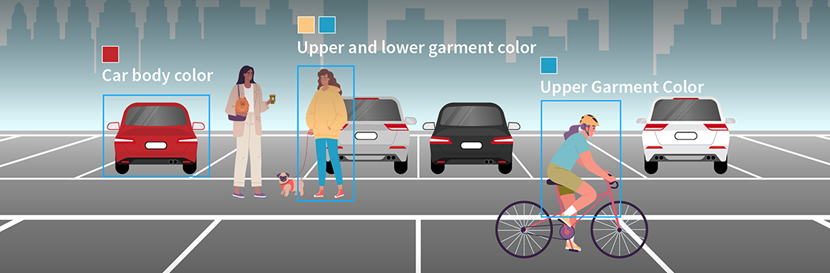
Smart cameras use detailed programs trained on huge sets of data to identify certain item kinds. Rather than merely noting motion, the setup sorts targets into clear groups like people, cars, and other non-car items. This thorough sorting lets the gear skip unrelated items on purpose. If a bird goes by the lens or a leaf drops in view, the program sees it does not fit the set danger groups. Then it holds back the warning.
Smart Intrusion Prevention (SIP) cuts down mistaken alerts by zeroing in on confirmed targets with care. Users can create exact virtual lines, such as cross line detection, enter area detection, and leave area detection. The setup only sends a notice to the control center when a sorted target, like a car or a person, crosses these exact limits. In this way, it blocks all other everyday distractions.
Smart spotting needs a sharp video stream to sort items right. The fifth-generation night vision image processing tool, called Wise-ISP, offers great results in dim light. It cuts down on picture fuzz and keeps real colors at night. Thus, the camera gives the programs top-quality input. For more on these base hardware boosts, check out full technology overviews.
Understanding the divide between simple sensors and clever spotting matters for setting up your security setup.
The main difference comes from awareness of context. A basic sensor only senses that an event occurred. On the other hand, a smart system figures out precisely what takes place. This jump from spotting physical shifts to meaningful recognition stops outside factors from messing up your security records. For instance, a loose cat strolling over a storage yard dock would set off an old PIR sensor. However, a smart camera would properly label the creature as an animal and stay quiet.
A setup overwhelmed by wrong alarms squanders key staff time. When workers use hours checking clips of bending branches, their output drops sharply. Clever spotting clears away the clutter. As a result, each notice sent to the video control program becomes very useful. Security groups can act fast on actual risks instead of always checking mistaken ones.
Though upgraded cameras have a modest upfront price for the gear, the full expense over time drops a lot. UNV items aim to be straightforward to handle. Plus, with proper aids, they allow setup and adjustment from afar. This saves worker effort and trip fees. Cutting down on lost work time for guards who check false warnings covers the gear update costs quickly.
Putting the proper tech in the suitable spot boosts the power of your security edge. Users can discover well-fitted solutions by industry to fit certain job needs.
Big sites like the Hyundai Premium Campus in Korea need round-the-clock motion detection to find moving items over wide spaces. Smart cameras with 120dB WDR give clear sights both in and out of the site. They manage tough backlit spots at entry gates with ease. By sorting cars and people, the setup protects the edge without alerts from animals or bad weather.
In crowded spots like malls or store chains such as UNIQLO in Korea, regular motion sensors prove pointless during business times. Clever systems apply the People Counting feature to track crowd movement while holding the security level steady. They watch set no-go areas, like stock rooms, and skip normal staff actions. At the same time, they warn about odd behaviors that stand out.
Top-level housing spots, such as O Residencial Itahyê in Brazil, use Smart Intrusion Prevention to stop unwanted outsiders from entering. Thanks to line crossing detection and intrusion detection alarms, the security group can handle the busy mix of locals and guests easily. This keeps the neighborhood secure from unapproved cars or people. And it avoids warnings for every stray pet that passes by.
When creating a current security web, choosing gear that mixes spotting with active guard work gives the top outcomes.
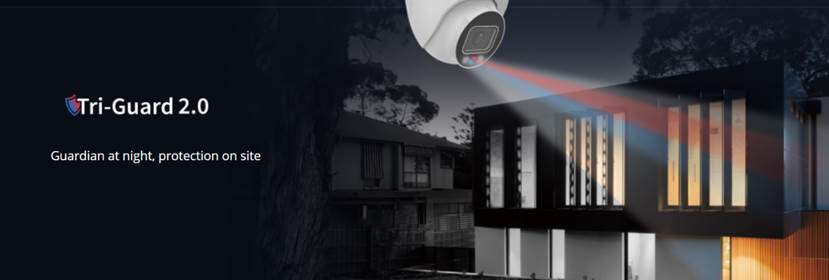
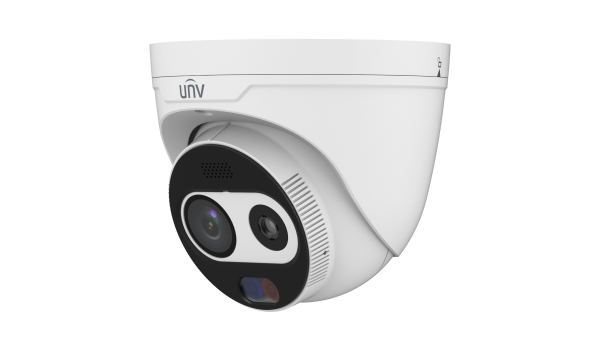
The Tri-Guard technology blends Smart Intrusion Prevention (SIP), ColorHunter, and Active Deterrence. Built to stop crimes after dark, this blend means the camera goes beyond just watching quietly. It spots the risk correctly with SIP, records the moment in true color, and starts a quick reply to halt the break-in before harm to goods happens.
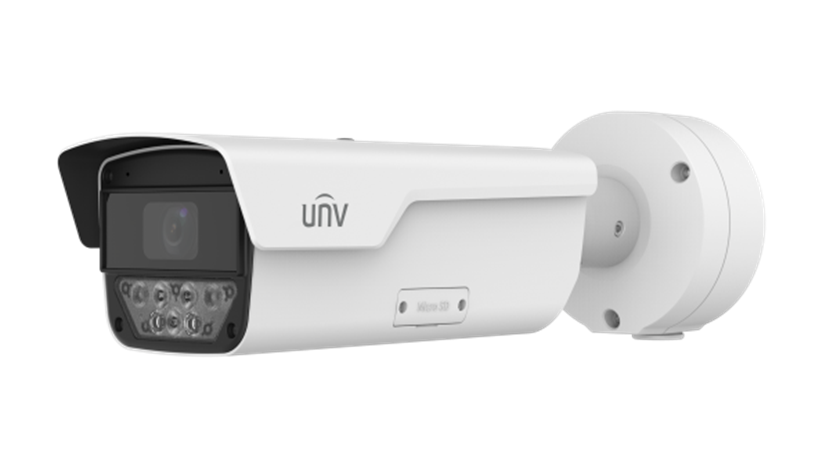
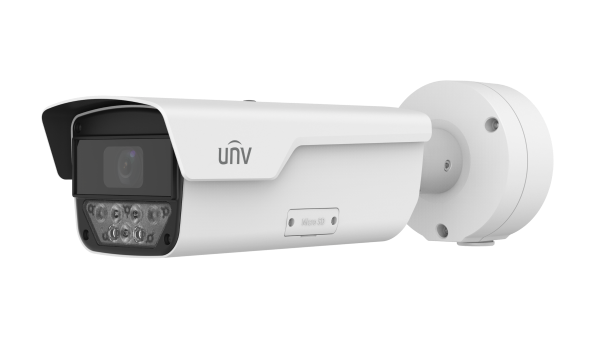
For jobs that call for the utmost in fine points, the IPC268EA-AHDZK-I1 in the AlphaView series shines. It has a 1/1.8" large sensor that gathers 180% more light than a common 1/2.8" sensor. It pairs with an F1.0 opening that takes in four times more light than an F2.0 lens. This strong setup sorts and records moving cars, non-moving cars, and walkers. It spots up to 120 targets at once.
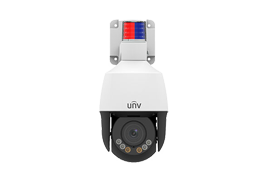
After the smart program verifies a real target, the warning steps kick in. Tri-Guard 2.0 now uses red and blue light signals, which stand out much more than usual white flashes. Paired with a built-in mic and speaker for sound alerts, this direct action scares away breakers the instant they pass the virtual line.
Guarding your site or providing high-end gear to your area calls for a reliable maker ally.
Unlimited New View started its own work in 2011. It grew from video guard to a full AIoT supplier. The firm reaches over 200 nations and areas. It runs 21 branches abroad and offers skilled local help from pre-sale advice to fix support. One can review their broad corporate background to grasp their drive for a safer world through skill and steadiness.
A solid supply line ensures job schedules stay on track. The firm runs a 70,000 square meter making site in China that turns out 20 million units yearly. It also uses flexible smart production control systems. On top of that, a global shipping net backed by five key storage spots covers Europe, America, the Middle East, and Asia. This secures on-time arrival for major rollouts.
Those who set up systems and sellers looking to expand can join the Dealer Partner Program. This plan driven by business goals helps allies sell greater amounts, make sales simpler, and gain good profits. It offers a fair MSRP setup to keep enough profit space, firm online price guards, and area-based skill training. Allies get the right aids to secure tough security jobs.